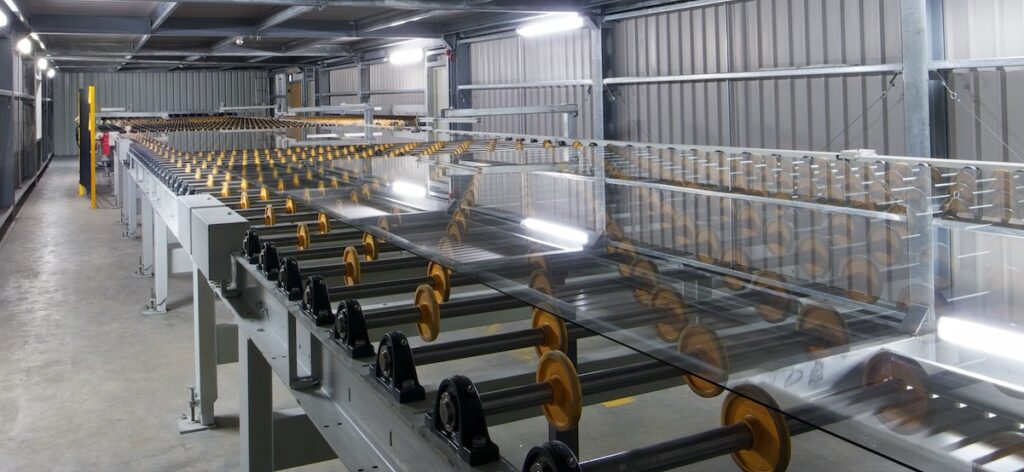
Speed. Precision. Efficiency.
Today’s flat glass manufacturers are under constant pressure to deliver flawless products faster and with less waste. Yet, even the most experienced teams can face costly setbacks when manual processes leave room for error.
Here’s a closer look at the most common flat glass processing mistakes and why flat glass processing automation is quickly becoming the new standard for improving quality, minimizing risk, and protecting profitability.
Common Flat Glass Processing Mistakes
1. Inconsistent Cuts
Manual cutting introduces human error, especially during scoring and breakout. One of the most frequent mistakes is flare at the end of the score, which leads to breakout issues and unusable glass.
Even slight inconsistencies can create scrap, delay projects, and strain production timelines. In an industry where precision is everything, inconsistent cuts can lead to high material losses and customer dissatisfaction.
2. Surface Damage During Handling
Without automated handling solutions, flat glass sheets are at much greater risk of scratches, chips, and breakage during transport and stacking. Damage caused by manual handling can lower overall yield, increase rejection rates, and drive up operational costs.
Advanced vacuum handling systems demonstrate how automation can significantly reduce surface damage, improve worker safety, and increase production throughput – especially in delicate material handling like glass.
3. Incorrect Edge Finishing
Edge finishing is crucial for both aesthetics and structural integrity, particularly in architectural and automotive glass.
Manual edging can leave uneven surfaces, weak points, and visible imperfections. The thicker the glass, the more difficult it becomes to achieve consistent results by hand, increasing the likelihood of breakage or failed quality inspections.
4. Overheating or Underheating During Tempering
Tempering demands precise thermal control. Without automation, maintaining the correct balance of heat distribution is difficult, often leading to improperly tempered glass.
Glass that is under-tempered or unevenly tempered may not meet required safety standards and could later fail in service, exposing manufacturers to significant liability risks.
5. Inefficient Coating and Laminating
Hand-applied coatings and manual laminating introduce inconsistencies that affect optical clarity, adhesion, UV resistance, and impact performance.
Products produced with uneven coatings or poor lamination can fail to meet end-use performance requirements, resulting in higher rejection rates and customer returns.
How Automation Solves These Problems
Flat glass facilities embracing automation are seeing measurable improvements in yield, quality, and operational efficiency. Automation doesn’t replace craftsmanship, it enhances it by removing the margin for costly errors. FGE Solutions offers a range of flat glass machinery that helps facilities improve consistency, reduce waste, and scale production efficiently.
Automated Cutting Systems
CNC-controlled cutting machines produce exact, repeatable scores every time, significantly reducing scrap and optimizing raw material usage.
Automation ensures each cut meets strict dimensional tolerances, improving breakout consistency and overall production speed.
Automated Handling Equipment
Vacuum lifters and robotic arms gently transport glass without the risk of human-caused damage. Automation improves both product quality and workplace safety, key factors in scaling up production responsibly.
Systems like these allow manufacturers to handle large sheets with precision while reducing the risk of surface scratches and fractures.
Automated Edging and Polishing Machines
Automated edging systems ensure uniform edge finishes that meet safety and aesthetic standards. From pencil edges to flat polished profiles, automated machines allow manufacturers to process a wide variety of edge types consistently and efficiently.
Tempering Furnaces with Automated Monitoring
Advanced tempering systems use automated temperature sensors and intelligent controls to maintain precise heating and cooling cycles.
Automation ensures that every glass lite meets impact resistance and safety requirements, while also optimizing energy efficiency and minimizing rework.
Automated Coating and Laminating Equipment
Specialized automated equipment applies coatings and laminates with extreme consistency, improving optical performance and extending product durability.
Facilities investing in automated laminating lines can deliver higher quality products while dramatically reducing manual labor and material waste.
Benefits of Automating Flat Glass Processing
- Consistency: Automation delivers repeatable, high-quality results across every production run.
- Reduced Waste: Precise cutting and handling minimize scrap rates and maximize material efficiency.
- Improved Safety: Reducing manual handling lowers the risk of workplace injuries and damaged goods.
- Operational Efficiency: Faster cycle times lead to higher throughput without sacrificing quality.
- Scalability: Automated systems can adapt to evolving production needs and support future growth.
As Glass Magazine recently outlined, embracing automation for glass production is no longer just a trend — it’s becoming essential to stay competitive in modern glass manufacturing. Explore our full lineup of flat glass automation solutions.
Why Flat Glass Facilities Choose FGE Solutions
At FGE Solutions, we help manufacturers modernize their operations by sourcing, installing, and supporting advanced flat glass machinery built for today’s demands. Our expert team partners with each client to recommend the right automated solutions for their production goals — whether that means upgrading a single line or designing a fully automated system from the ground up.
With access to leading-edge technology and deep industry expertise, FGE Solutions empowers facilities by providing an approach that includes:
- Comprehensive production analysis to understand your unique needs
- Tailored recommendations with multiple options and throughput comparisons
- Expertise in European and North American automation technologies
- Industry-leading customer service and post-installation support
We don’t just sell equipment — we partner with you to improve your operations, maximize ROI, and minimize risk. Learn more about FGE Solutions and why we are experts in glass production solutions.
Smarter Production Starts Here
Flat glass production will always demand craftsmanship, but the future belongs to facilities that pair skill with smart automation. By addressing common production mistakes with the right technology, manufacturers can reduce errors, protect their bottom line, and deliver better results for every project.
Ready to explore how automation can transform your flat glass operations. Contact FGE Solutions to start building a smarter, more profitable future.